Oh the job I do for you people. Oh the horror. Below you will find some DVD reviews from those loony douchebags over at Mr. Creepo productions. If anyone decides to actually go out and rent/buy any of these let me tell you right now… I warned you! Just as the titles suggest, these sexploitation/horror "films" are heavy on the skin (or the skin is really heavy… see below) but no amount of areola can make them good. Well, chilluns, feast your eyes on what I like to call: The Six Hours I Will Never Get Back.
The Sandy Hook Lingerie Massacre (2002, Mr. Creepo)
Street Date: Currently available at www.mrcreepo.com
Dear God. Again, dear God. With a promising title, and the assertion that Debbie Rochon's breasts will be bared I am usually a happy little camper. I open my DVD player, throw in Sandy Hook tittering to myself about the exploitive genius I am about to watch and lo and behold, not 10 minutes into the movie my eyes are boiling out of my head. You see, Mr. Creepo is a real guy. He hosts his films, speaking in a nasally, pseudo-pedophile voice, and touts the badness of his own films. Of course, I don't think he knows just how bad. To show you this, gentle reader, I will utilize the patented 1 sentence plot synopsis. Ahem, Debbie Rochon and 6 overweight strippers go to a weekend retreat on the Jersey Shore where they run afoul of a murderer with a hook, in bondage gear, who's motivation for massacre is still escaping me, a creepy lighthouse, an abandoned amusement park and they die (after a disturbing nipple and tongue piercing segments featuring the belly dancing overweight stripper). The transfer to DVD is your basic DVD-R with a generic label on the disc, trailers for other Creepo films are included but no other special features. To be fair, though, the box art is pretty darn good for this schlocky attempt at filmmaking. The film is well over feature length (too well over) and I don't think, in my humble opinion, that you will find anywhere else on the planet anything like The Sandy Hook Lingerie Massacre, unless of course it is…
Skin Eating Jungle Vampires (2002, Mr. Creepo)
Street Date: Currently available at www.mrcreepo.com
I know that you can't understand this, but back-to-back Mr. Creepo is definitely detrimental to my mental state. Ok, this time we are in Costa Rica (well, some of the cast is in Costa Rica, probably shot on Creepo's vacation) and after a UFO crash-lands (piloted by Mr. Creepo of course) into a volcano, the female aliens that he controls must revert to their jungle ways and live as skin eating vampires. The vampires include a few plump strippers from Sandy Hook but new Creepettes (I swear, that's what he calls them) are added (alas, no Debbie Rochon this go 'round). These poor emaciated new girls engage in sordid girl on girl action after a fine meal of human entrails. That would have been a great scene, until it went on for fifteen minutes. Same DVD-R as Sandy Hook, so if you can't play the R's, then pass on the Creep. Bet you thought I was legally insane, right? Well, not until…
Barely Legal Lesbian Vampires: The Curse of Ed Wood (2001, Mr. Creepo)
Street Date: Currently available at www.mrcreepo.com
The Magnum Opus of Creepo, Barely Legal tells the tale of some lesbian vampires. I'm not sure what this tale is, but it stars the plump strippers and some other emaciated women in various scenes of lesbian vampirism and some you-should-not-be-naked S & M and bondage. Intermittently, Creepo appears in a graveyard and begs the ghost of Ed Wood for help making the film that we are watching. Ed, in a ghostly voice over, gives the Creepster some advice. All of it bad. On the plus side, this release is a real pressed DVD with some pretty damn good box art. Creepo sunk the dolla dollas into this one. Trailers are still the only special feature, aside from the warm feeling in your heart.
After taking over for Howard Stern on the Western half of the country, Carolla's show was an ever-changing entity. Once he moved into the podcast world, he started with one-on-one interviews and eventually got the crew from his morning show back together. Complete with news, Bald Bryan's sound effects and even Dawson's weed laced announcing, Carolla is back in business on his terms with his daily podcast.
Edward D. Wood, Jr. has been called "The Worst Director of All Time" and is a winner of the Golden Turkey Award. He has made some of the most laughable, and entertaining, films to ever come out of the independent Hollywood scene. With classics like the hastily constructed Plan 9 From Outer Space (1958) and the surrealistically autobiographical Glen or Glenda (1953) Wood has placed an indelible mark on the art of film production resulting in a big-budget life story by movie giant Tim Burton, titled Ed Wood (1994). There is a lesser-known sidelight to Wood's career as a producer-writerdirector-actor, almost another career entirely. Edward D. Wood, Jr. is one of America's most prolific short story writers and novelists.
Beginning in 1963, just to make meager ends meet for his wife Kathy and himself (insert: "booze"), Wood began to write for some of the major California smut publishers (this does not include Wood’s unpublished, 1948 novel The Casual Company, a Marine comedy that led to his disastrous stageplay of the same name). He would continue to write novels, short stories and essays for the next fifteen years, until his death on December 10, 1978. In that time, Wood, under quite a large number of pseudonyms, is known to have penned at least 80 novels, hundreds of short stories and a slightly lesser amount of non-fiction. There are more Wood-writings discovered every year, usually under another of his many pseudonyms. Publishers like Gallery, Pendulum, Calga, Pad and others would publish sex, smut and sleaze novels at a breakneck pace through the sixties and seventies, and Wood, by all accounts, was the largest on staff "producer," meaning the volume of his work was a great deal more than his fellow writers. At the same time, Wood wrote many soft and hard core porn screenplays for A. C. Stephen, Jacques Descent and Joe Robertson.
I hear so-called buzz all the time about great movies that I must see. I go in wondering what the hype is all about only to leave angry and disappointed. These are definitely somebody's favorite movies. They are definitely not mine. I feel bad for people who like these movies more than they should. I feel that there is a disconnect with rational thinking. I know I sound like an ass right now, but you really need to read a lot more of what I write in order to understand that I usually do. So there.
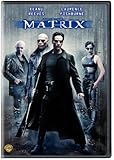
The Matrix (1999)
This movie was praised for its special effects and unique filming style. I'll give the Wachowski brothers credit there. There was some amazing stuff happening on screen. Too bad none of the wondrous activity had anything to do with the story, the script or the acting. Keanu Reeves earned a lifetime boycott from me after Johnny Mnemonic, but I still watched this when it was on cable because I knew it couldn't really hold up to the hype, and I was right. Substance and talent be damned, the film was turned into a trilogy that got its fans to turn on it. That's the one thing about this series I truly appreciated.
Is there any better location in which to set a monster movie than a naturist colony? A Nazi death camp would provide opportunity for fetishistic sleaze in black leather, but using a nudist camp preserves all the innocence of the old school monsters while gifting us with copious quantities of naked female flesh. The Monster of Camp Sunshine is a terrible movie, make no mistake about that, but it's also a truly surreal, bizarre and unique picture that deserves all those adjectives and more. Unlike most of the Z grade movies I've reviewed for Cinematic Hell, this is one I'd truly recommend you see, just for the experience. Apparently sincere in its message about naturism, its tongue is nonetheless firmly in its cheek when it comes to the monster and it goes full out holy batshit insane when it feels like it. The last fifteen minutes is sheer outsider genius and it takes something truly special nowadays to make this reviewer exclaim, 'What just happened?'
Here we go folks; I have finally decided to vent my feelings about the abominable Twilight movies, and all other Twilight related material. First, to use the word vampire to relate to any of these movies would be unnecessary and irrational. For these are not the vampires of legend, ones who make children shiver under the covers in their beds or make their victims scream in fear. Give me a good vampire -one who pulls the gore and guts out of their victims without hesitation and thought. Vampires like those portrayed in 30 Days of Night and the novels of Brian Lumley. These vampires have no mercy, and they do not shine and shimmer in the light. They certainly do not sit longingly staring at their human girlfriends in fields of flowers. They rip and roar through their cities and towns and let nothing stand in their way.
David Hayes interviewed the late great Sid Pink nearly a decade ago. Sit back and enjoy his discussion with the cult legend.
“Might as well do this now, I don’t know how much longer I’ve got left,” jokes Sid Pink. Heralded as one of the industry’s most daring, innovative and overlooked writer/director/producers, Sidney Pink sits back in his Florida home not even hinting that the man behind Angry Red Planet (1959), Journey to the Seventh Planet (1962), Bwana Devil (1950) and Reptilicus (1961) is anything but your average retiree. As one of the first truly successful independent film producers in the United States and abroad, Sid Pink is in a league all his own.
After graduating from the University of Pittsburgh in 1936 with a degree in business administration, Pink traveled to the starry-eyed land of Hollywood. He eventually landed a job as Production Budget Manager with Phil Krasne’s Grand National Pictures. While there, Pink worked with the great James Cagney and Tex Ritter. His first production for Grand National, and with James Cagney, was Something to Sing About (1937). “I learned a great deal from Jimmy Cagney. He was an “Old Show Business” kind of guy… undefeatable. He taught me things at Grand National that I used up until my last few pictures.” When Cagney resigned from Grand National, the ship was quickly sinking and Pink found work as a Production Manager with Harry Cohn’s Columbia Pictures. Pink created the Production Budget Department at Columbia that would keep track of the production budget on every picture, with a detailed report delivered to Cohn everyday. Cohn, a notorious blow-hard that treated people like dirt, called Pink into his office one day and threw a tantrum concerning the latest budget report (that Pink had not gotten to review yet). “In my own colorful language, I proceeded to tell Cohn off. He shut his mouth and stared at me while I outyelled him. By the time I got to the second floor I was met at my office with my paycheck and my employee pass was pulled.” Pink said goodbye to Columbia Pictures and Harry Cohn over a misplaced decimal point. Pink stayed out of filmmaking until 1950, and then came back with a vengeance. He made Bwana Devil, with Robert Stack, the world’s first 3-D color movie. This would be just the tip of the iceberg for Sid Pink’s role as a “film innovator.”
Always, “…fascinated with science-fiction,” Pink penned one of the most highly regarded science fiction epics of the fifties, namely, Angry Red Planet. Using a process called Cinemagic, Pink became the first director in the history of motion pictures to attempt to bring a viewing audience to the surface of a planet.
“It [Angry Red Planet] was written on my kitchen table. My kids were my critics, they’d tell me what was good and what just fell flat!” Eventually, Pink had enough “good” material to go into pre-production. Written, produced, directed and completely financed by Pink, the best that they were hoping for was to break even. He and his production partners were very pleasantly surprised.
“The damn Cinemagic didn’t work like it should. It was supposed to be sort of a 3-D effect. What we came up with was great anyway!” Essentially, the Cinemagic process flipped the positive and negative on the film. What would normally be a black image became a white image and vice versa. This effects process was used every time the astronauts visited the planet of Mars to a startling effect. It makes the planetside visits look completely surreal. Layered with a red tint, the audience could almost expect to be on a different planet. “From the checks I still seem to be getting, the picture is still playing. I read recently that it was on American Movie Classics, on cable.” Angry was released by American International Pictures headed up by the notorious Sam Arkoff.
“Arkoff and I had a working relationship. Neither of us trusted the other… which worked out well because I wouldn’t touch him with a ten foot pole. Jimmy Nicholson was the brains of that operation. With Arkoff, you never got a straight count.” Although Angry Red Planet was a great success by independent standards, Pink never really got the return on the picture that would have been his due with normal, non-Hollywood, accounting.
Pink left sci-fi for a while, but then made a distinct return with Journey to the Seventh Planet. "Journey was a delight for me. For the first time I was able to do exactly what I thought needed be done, without other approvals. As the author, director and producer, my only limitation was my pocketbook and my imagination." Journey went into production before Pink's other sci-fi/monster films (Angry and Reptilicus) had begun to make any money. Still in Denmark from a previous production, Pink decided to film there with the $75,000 in his account. The first problem that Journey ran into was the spaceship set. "How do you build a spaceship in a country that scoffs at the very idea of it? That's where my burlesque stage experience came in very handy." Pink placed a few grills in the walls, gathered a few sound meters from his sound technician and posted "Starboard" and "Port Atomic Engine" signs in the room. Instant starship.
"The idea for the story [of Journey] came from a theory I had read, that the human brain is so complex and vast in its potential that no human has ever been able to use more than twenty percent of its capacity... I love that story and regret to this day that I didn't nurture it more and give it the kind of budget and production values it really deserved. To my dying day I shall maintain that Journey was and is a great sci-fi story, and at the considerable risk of being called egotistical, I must assert that the rip-offs of my story only help to prove its universality and fascination. I have seen the Star Trek cycle succeed with less worthy scripts."
Pink's, "hobby of science fiction" took him from a little hamlet in Denmark to Mars, Uranus and to the center of the earth with Reptilicus ("a real monster of a picture, no pun intended").
Pink followed Journey with a score of highly regarded films including The Castilian (1962, with Ceasar Romero), Reptilicus (still playing today on television, and a prestige format screenplay book has just been released with some great never-before-seen pictures), Madigan’s Millions (1968, having the dubious honor of being Dustin Hoffman’s first film work) and The Man from O.R.G.Y. (1970, Sid Pink’s disastrous, and only, “attempt at sex,” on film) among many others. Pink has also written an autobiography, titled So You Want to Make Movies: My Life as an Independent Film Producer, which was published in 1989 by Pineapple Press, Inc. and is still available. Currently Sidney Pink is, “enjoying his retirement,” and, “occasionally makes it out to a couple conventions a year.” And, just to stay on the top of his game, Pink writes weekly and monthly columns for The Brauerd County News, in Florida, and The Senior News.
Sadly, Sidney Pink passed away late in 2002 before the publication of this article.
He will be fondly remembered for his contribution to the film industry.
We're here to be entertained and take our minds off things, says Judge Mitchell, but I wish I could take my mind off this. It's a unique story full of fascinating moral and legal questions that centre around a pair of Siamese twins committing murder and matrimony. Some are posed on the wild publicity material. 'What happens in their intimate moments?' the posters ask us. 'Is it legal to marry a Siamese twin?' 'Can they have a normal love life?' You'd think it was a porn film from all this salacious hype but it's far from that. It's a low budget exploitation picture from 1951, loosely based on real events in the lives of the Hilton Sisters, Daisy and Violet. Yes, long before Paris and Nicky there were Daisy and Violet, and they were as unlike the modern Hiltons as you could comfortably imagine. By all accounts they were pleasant, intelligent, talented ladies who simply happened to share a circulatory system. They're the Siamese twins from Tod Browning's Freaks.
This is the oft-ignored follow up to the original Godzilla! In this piece of foam rubber brilliance, Anguirus (a spiked turtle-type monster handily ripped off by Gamera) fights Godzilla. Tokyo is leveled again. Roll credits and get cracking building the next giant creature.
The Woman Eater (1957)
Follow me here. A mad scientist has a giant carnivorous tree. In order to keep it happy he feeds it slutty half-clothed women. The tree gets so happy it makes a serum that can raise the dead. I have a sin to admit. I really enjoy giant plant movies. That said, The Woman Eater needs help. It’s sad when Ed Wood’s Venus Flytrap does it better. It’s sad that I can say that anything Ed Wood did was better.
A wise man (namely David Hayes) once stated that a back story is irrelevant when it comes to developing evil. I agree wholeheartedly with this approach, which brings me to my review of the new Halloween movies. The original Halloween movie was the first movie that I ever saw, and at the age of five I remember being not only interested in the characters but also scared by the idea of Michael Myers. I didn't need to know where he came from or how he developed as a human being in order to understand that he was bad and/or evil. I knew that he was evil by the actions that he committed on screen. When, the new movies came out I found myself excited. How was Rob Zombie going to approach this iconoclastic and legendary story?
Mesa of Lost Women is two films in one but that's two too many. It started out under the working title of Tarantula, which would have been original at the time as Jack Arnold's movie of the same name didn't arrive until 1955, but this one didn't arrive at all, partly because the funds started to run out but mostly because writer/director Herbert Tevos was a little too good at driving the cast and crew into quitting. A couple of years later, his replacement was one of the more fascinating names in exploitation cinema, Ron Ormond, who wasn't just a writer, producer and director of low budget movies, but also a vaudeville performer, magician and Air Force colonel. At this point he was known mostly for his Lash LaRue westerns, but this mess proved to be his ticket into an ever more eclectic world that soon included gorilla sleaze, frigid wife sexploitation and Nashville musicals. Eventually he would turn to Jesus and become the foremost name in Christploitation.
For a bad movie, and this is a really bad movie, it's a quintessential low budget fifties scifi romp, perhaps even more fun to watch than Plan 9 from Outer Space. If it had been released half a century later it would still be in movie theaters today with cult audiences heckling the screen on a monthly basis with producer/director Phil Tucker kept busy flying from screening to screening to sign autographs. I'm sure he would have plenty to talk about during a Q&A too, given that he shot the film for a measly $16,000 in only four days without any sets, and somehow managed to make it in 3D and with stereophonic sound too, the first time that had been done on a scifi film. If Tucker was alive today, I'd try to introduce him to James Cameron. Avatar may have earned two billion dollars on the basis of its 3D ticket prices but that's only eight times its cost. Robot Monster grossed a million bucks and that meant more than 62 times what Tucker spent on it.
We've all been there. Everyone has been in an argument in which the other person took things too far. They said something horrible about you. They said something about your family or your kids. They said they'd screw you over so bad you'd never recover. You lose it and fight back. It's a natural thing to do. This week we saw someone connected to the highest peaks in Hollywood do something so despicable that I can't even begin to share my level of disgust with this person. The person I'm speaking of is Oksana Grigorieva.
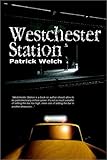
Patrick Welch's Westchester Station is a kaleidoscope of interesting characters, some familiar throughout history and literature, and others based completely on the inventiveness of their author. Robert Winstead, Winchester Station's protagonist, is predestined, during a Chicago blizzard, to try and find his way to Schenectady, NY by the only means possible, the enigmatic train depot called Westchester Station. In a series of events not quite controlled by him, Winstead is taken to the train station and told by the stationmaster that Winstead is there for a reason. This reason is the root of Winstead's trip through the magical depot and the reinvigoration of his entire being. Winstead, a marketing account executive, is dissatisfied with his current position, status and general life plan. By meeting and interacting with (both causing and solving problems) the denizens of the depot, Winstead learns his reason for coming to Westchester station, which is his reason for, well, being.
Marcus Koch is a special effects wizard that has leant a gooey, drippy hand to some wonderful genre films, most recently H.G. Lewis' The Uh Oh Show and Vito Trabucco's Bloody, Bloody Bible Camp. He is also an award-wining director and the auteur responsible for 100 Tears, Rot (my personal favorite) and the upcoming Fell.
Marcus took a bite out of the Head Cheese and we were lucky enough to get a few words with him.
CHC: It is a definite pleasure to be talking to the director of ROT! I am unashamedly a huge fan of the film. Being your first film, can you comment on the experience itself and if there are any updates on a new presentation?
There's just something at once magic and awful about the old exploitation movies of the thirties and forties that offered up tantalising titillation under the pretense of educating the masses. The fake education angle had little to do with censorship, as these films weren't shown at reputable cinemas who were restricted to screening films with an official censor's seal of approval, and more about suckering in the widest possible audience. Mostly they were distributed roadshow style across the nation, an entourage breezing into town like a carnival or revival meeting to a blaze of lurid publicity, blitzing a local rented theatre and quickly moving on before the arbiters of morality in the area descended. Films were often the least important part of the show, given that they rarely delivered on their outrageous promises and the barkers made more money off the pamplets or overpriced Bibles that they hawked than they did from actual ticket sales.
Are cult movies your thing? Do you love the so-bad-it's-good genre? Well nobody knows them like Jeff Dolniak, so sit back, dig in and worry about society as a whole.
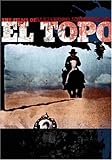
El Topo
Cult director Alejandro Jodorowskys incredible mind numbing hippie trip with out the acid. The imagery hits you consistently with some of the most bizarre images this side of Tod Browning. This film actually is a western to, but Eastwood wouldn’t touch this!! Recommended for lovers of weirdness and lots of midgets in films.
After watching The Strangers a few times, I became truly aware of the misogynistic views throughout the film. The women are separated into two categories: vulnerable and violent, but all three women are instigated only by their male figures. Kristen McKay’s character (Liv Tyler) cannot even seem to tie her shoe laces without her boyfriend. If James (Scott Speedman) isn’t carrying her from one destination to another or unzipping her dress and removing her jewelry piece by piece, then he is being beckoned for by Kristen throughout the entire movie.
Back in the silent era William Beaudine was a name to be reckoned with. His acting career took off in 1909 but he soon became far better known behind the camera, beginning as an assistant director in 1911 at a mere nineteen years of age and progressing quickly up to full director four years and 55 films later. He made it as high as Mary Pickford movies like Little Annie Rooney and Sparrows before making four films in England and somehow alienating Hollywood. So he became 'One Shot' William Beaudine, churning out movies at a rapid pace for Poverty Row studios like Monogram and PRC, often without retakes. He racked up hundreds of these, some shot in less than a week, and while they were often capable, even astounding if you consider the budgets and the shooting schedules, they still weren't very good. This eight day shoot was his last film, shot back to back with another weird western, Billy the Kid Versus Dracula, which is even worse than this.
Strangely he hadn't made too many crossover movies before, with the stunning exception of Bela Lugosi Meets a Brooklyn Gorilla in 1952, but he seems to have taken the genre clash as a ideal setup for dry comedy and so played it straight but outrageous. This approach leaves it akin to a TV sitcom with the laugh track removed, unashamedly camp and ripe to be converted into yet another stage musical like Reefer Madness and The Evil Dead. You can imagine what's going to come from the title alone but the standard western town being emptied of inhabitants while the credits roll underlines the atmosphere of fear. Just in case you've been living under a rock for the rest of your life, there's a frickin' huge painted mission sitting atop the frickin' huge painted hill that looms behind the town like the frickin' huge painted backdrop it is. One Shot hadn't had a budget since the advent of sound. Anyway, take a wild stab as to where the Frankensteins live.
Guess why everyone's getting the hell out of Dodge. Yes, they're Frankensteins. C'mon, work with me here. They're Dr Maria Frankenstein, who is the granddaughter of the Count, because even the title of this film is wrong, and her rather elderly brother, Dr Rudolph Frankenstein. She's actually not too bad, because she's played by Narda Onyx, with bright eyes, rosy cheeks and a perfect accent for a Frankenstein. Onyx was Estonian but was born in 1931 so soon became a refugee bouncing around during the war looking for a home. Her accent is exotic because it's a potent combination of Estonian, German, English, Swedish and Canadian, with an emphasis on rolling Rs. The influences are obvious: she's the Bela Lugosi to Stephen Geray's Peter Lorre. Geray was born in Austria-Hungary in a town that is now in the Ukraine, but as Rudolph he's 27 years older than his screen sister, almost double her age but still dominated by her character.
The inevitable question is, 'What are they doing in some western town?' The inevitable answer is more of the usual. 'Another wonderful storm!' cries Dr Maria Frankenstein as we first meet her, for that's what the deserts of the American southwest have in common with the old gothic tales of old Europe: electrical storms. Other than the location, the Frankensteins look the part. They have white lab coats and an anatomic chart on the wall. They have a laboratory full of scientific gadgets that spark and light up. They have a young man strapped to a table with a steel helmet on his head painted in the colours of the Jamaican flag. For this, there is no explanation. I was waiting for the film to become Jesse James Meets Frankenstein's Daughter and Her Sidekick, Bob Marley, but it never manifested, mon. Maria is following in the footsteps of her grandfather (we discover that her father was just a weakling) in trying to resuscitate brains and animate corpses.
Unfortunately she's not too good at it. Francisco Lopez promptly proves to be yet another failure by rudely dying on her table, though we see what Maria doesn't and realise that he dies because Rudolph deliberately substitutes poison from a bottle with a huge skull and crossbones on it for the digitalis that his sister needed to save his life. He obviously wasn't kidding when he said he really wants to go back to Vienna. Maybe a little child murder will help make his dreams come true. Maria is too busy to notice though, so she thrusts her fist into her palm and goes back to the encyclopaedia, I mean to grandfather's notes. 'What a fool I've been!' she cries. She's made fundamental errors with the duothermic impulsator, the fool, by only attaching it to the corpse at hand, rather than the brain of a living body too. Bizarrely she can turn to her well bookmarked 'Precisely What You're Doing Wrong' chapter to find out precisely what she's doing wrong.
Rudolph may have known all along because he points out that it might kill the living brain, but that's just a cue for Maria to glow insanely. She's magnanimous about it: 'That's a chance I am willing to take,' she cries. She needs a powerful giant not a child, then she's bound to succeed. 'But what good will it be to succeed?' cues Rudolph. 'Imagine!' she replies. 'We'd have someone to do our bidding who can't be put to death. Just as we have given it life, only we can take its life away.' In other words, she's an even crazier loon than the rest of her family and we can't help but wonder how these Frankensteins keep surviving long enough to breed and who they keep finding to help. Maybe Rudolph is really the same age as his sister but inbreeding took its toll. Maybe he doesn't have teeth and that explains why he has so much trouble saying simple things like 'three children'. That's how many have died thus far from the next door village.
Francisco Lopez makes four, but he's special because he has an annoying sister who can happily remain annoying throughout the film as its other leading lady. It's because of her that the Lopez family is the last one left in the village, getting drunk on orange juice while they wait for Juanita to return from the house. She's played by Estelita Rodriguez, credited as usual simply as Estelita and who may just be the biggest star of the film, given that she came to it from the classic John Ford western Rio Bravo. Star or not, she's still annoying. She's the stereotypical spitfire senorita with her bright red shirt and bright blue dress, full of piss and vinegar and lathered with far too much make up. She's at the house to ask questions about Francisco, who is apparently suffering from a contagious disease, the very one that apparently caused the death of the previous three children and which apparently required them to be buried at night with nobody around.
Perhaps she was happy to play stereotypical Mexicans because she wasn't one: she was born in Cuba, at least a decade before the year of birth listed on her tombstone. If she was only 35 when she made this film, she'd been doing a lot of hard living, though that may also explain why she died before it could be released, officially of influenza but more probably of something a little more suspicious. She was far from the only person to end her career here, this film being something of a jinx for the cast and crew. Beyond being the last film for William Beaudine and Estelita, Narda Onyx never acted again, going on to write a biography of Johnny Weissmuller instead. Stephen Geray had only a single further credit, a minor one in 1966 as Man with Fish in The Swinger. Cal Bolder switched to TV and retired a couple of years later. Of the main stars, only John Lupton and Jim Davis went on to long careers.
Lupton, Bolder and Davis belong to the other half of this film, and the two halves haven't met thus far. Lupton is the suitably black clad and moustachioed Jesse James, who has mysteriously survived the Northridge raid but has found himself on the run ever since. Bolder plays his one remaining sidekick, a musclebound but apparently mildly retarded character called Hank Tracy. The pair have fallen as low as to have Hank boxing in impromptu prizefights in each town they find themselves in just to put food on the table, girlie ones too if this one is anything to go by, with a Tracy on one side, a Stacy on the other, and a Jesse collecting the bet money after the fact. At least One Shot Beaudine manages to sneak some interesting shots in, such as the one where Stacy punches Tracy into a horse so that its rider falls off. Are we clutching at straws so much that such a setup is a highlight? You betcha.
Jesse James is in town to meet up with the Wild Bunch, which has been similarly depleted down from a dozen to three because Circle Productions couldn't afford a large cast. Butch Curry is their leader and all he has left to lead is his brother Lonny and Pete Ketchum, yet they're still at each other's throats. Butch wants to pull a daring heist, to capture $100,000 of bank money from a stagecoach in a pass outside of Bisbee, but he doesn't think three members of the Wild Bunch is enough to take this much money from the one man who will apparently be on the stage with it, so calls in a notorious outlaw with a price on his head. That's a phrase that's continually used throughout the movie, by the way, like it's his actual name. Jesse James, Notorious Outlaw With a Price on His Head. Maybe he went native and the local tribe were feeling verbose. Lonny turns traitor when he can't get a third of the take and runs to Marshal MacPhee, played by J R Ewing's father, the reliable Jim Davis.
Bizarrely, Rayford Barnes, who plays Lonny and inadvertently causes the entire Wild Bunch to be shot dead by the law, would follow this role up with one in The Wild Bunch, the renowned one directed by Sam Peckinpah, albeit not in a major role. I wonder if Peckinpah was exhibiting a subtle sense of humour in the casting choice. Six years earlier Barnes had also appeared in a movie called Young Jesse James, but then everyone working in Hollywood seemed to make at least one Jesse James picture during their career. The stagecoach heist doesn't go well, but Jesse and Hank get away, with a bullet in Hank's shoulder. The sheer acting inability of this man is amazing to behold. I'm certainly no actor but every now and again I see a performance that I could outdo and Cal Bolder's here is one. I have more charisma in my sleep. Then again Bolder wasn't hired for his acting chops, he was hired because even his muscles have muscles.
He was discovered while working as a California Highway Patrolman under his real name of Earl G Craver, the agent impressed by his physique. He was 6' 4" tall, 260 pounds, with a 52" chest and a 32" waist. He isn't as dumb as he appears in this film, as he wrote a couple of novels after retiring from acting. Here he's as dumb as a post and he's destined to be Maria Frankenstein's new Igor, the giant she's been craving. Yes the two sides of this story do connect in the end, as Juanita bizarrely recommends the Frankensteins as the best hope of saving Hank's life. Quite why she would do this, I really don't know. 'Since they came here there has been nothing but death and sorrow,' she spits. They've murdered her brother and emptied her town. Yet a day or two on the road, one meeting with Jesse James, who saves her from being kidnapped by a wild Injun, and she takes them both to the painted backdrop. 'There they are', she says.
Fortunately from now on we get to see more Maria than we do Juanita. The senorita is the sort of girl who torments her beau into carrying her home on his shoulder and ravish her into shutting up, bitching all the way. Maria is a challenge. Sure, she'll kill you while you're sleeping and hook you up to a Jamaican mind transferrence device but at least she's gloriously old school in her antics. 'Wonderful,' she repeats as she salivates over her new Igor in his sickbed. We're entirely with her when she gets all uppity about being denied by Jesse James, Notorious Outlaw With a Price on His Head. 'To think that this outlaw with a price on his head refuse me for that girl,' she spits, forgetting her command of the English language and sounding more and more like Bela Lugosi as the film runs on. By the time Hank's head is shaved and the Frankensteins plot above his sleeping body, he obviously has his jaws clamped together in an attempt not to laugh.
It's here that the pulp horror antics reach their peak and we almost forget entirely about the western component. John Lupton is entirely too subdued for us to pay attention and he doesn't warrant any of the magnetism he seems to command over every lady in the film. Juanita and Maria have the choice of boring old Jesse James and young dumb hunk Hank Tracy, hardly a difficult choice for any red blooded young lady, yet both pick the notorious outlaw. Perhaps even in the nineteenth century, the ladies can't resist the draw of a bad boy celebrity. It's the only explanation I can come up with. I'm sure you can choreograph the rest of the film yourselves given that it hardly breaks new ground, except through the bizarre introduction of a brain that pulses like a heart. The dialogue descends to the level of 'Our village is free once more, thanks to you,' but should have been, 'I've just lost the last eighty some minutes of my life, thanks to you.'
I remember enjoying this movie years ago, though despising its partner in crime, Billy the Kid Meets Dracula. Revisiting it again now I can't imagine why. It's utterly unworthy of the memories I have of it, being capably shot but otherwise utterly ludicrous. Maybe it plays better on a tiny screen. Maybe it plays better if you're half asleep. Maybe it plays better if you've just watched something even worse right before it. Really it only has one thing going for it and that's the very concept of setting a gothic horror movie in the old west, not really a new idea but one that had never been used with such blatancy before. The weird western has grown in popularity over the last half century, mostly due to the work of Joe R Lansdale, and it's surely only a matter of time before he or another writer brings a great weird western script to life on the big screen in the same sort of crossover style that Bubba Ho-Tep represented. All we can know is that it isn't this.
Originally entitled "Cadaver Bay," Hellbound: Book of the Dead starts out promising the viewer quite a bit. As an ultra low-budget cross between The Evil Dead and one of Romero's zombie epics, Hellbound has some large shoes to fill. From the onset, the viewer knows that it is watching a shot on video cheapie. A young couple, Jeff Dylan Graham (Dead & Rotting, Home Sick) and Elizabeth North, living on an anonymous bay have had a few tragic occurrences in their lives.
Carlo Franci's score leaps out here first for attention, a cacophony of sinister crescendos that may have been distilled from every monster movie ever made, which is highly appropriate given the material. This is generic pulp peplum at it's best, or worst, depending on your perspective. Peplum is an Italian genre usually referred to as sword and sandal, historical or mythological epics that turn out to be a little less epic than you might initially expect and which often featured bodybuilders or slumming American actors in the lead roles. They are roughly to Hollywood epics what spaghetti westerns were to the American originals: low budget attempts to capture a style that perhaps inevitably ended up creating a whole new style of their own. Their heyday was the late fifties and early sixties, after the 1958 version of Hercules with Steve Reeves, during which time they were churned out in numbers that cannot comfortably be imagined.
I just couldn't resist following up The Brain That Wouldn't Die with The Atomic Brain to make a double helping of brains, even though this film was originally titled Monstrosity only to perhaps be renamed because the original title described the picture too well. Both films ponder the same theme, the old chestnut about mad transplant surgeons, and both come down firmly on the side that it's immoral, unethical and unforgivable. How quaint we were back in the sixties when it came to such things, but then this film was co-written by no less than four writers and directed by Ray Dennis Steckler's cinematographer. Having four writers generally makes the best script turn to mush and it isn't surprising that Joseph Mascelli never directed again. He kept busy for a while on Steckler's films, with 1964 also seeing him lens Strange Compulsion, The Thrill Killers and The Incredibly Strange Creatures Who Stopped Living and Became Mixed-Up Zombies!!?
Documentaries are a great way to take a look at a particular topic in depth and dig into every angle. The great thing about them is that sometimes they bring you a subject that you might not ever think about. I know we all see the Michael Moore flicks in the mainstream, and deservedly so, but there are so many that slide by unnoticed. Here are a few that I think everyone should pop in the DVD player.
King of Kong: A Fistful of Quarters
This is definitely on the top of my list for a reason. There has never been a film in my viewing history that made me root more for the hero and more against the villain than King of Kong. The tone is beautifully set with underdog Steve Wiebe, a potential major league pitcher who blew his arm out before his big chance, battling against Billy Mitchell, a hot sauce and barbecue king, for the title. Title of what? Highest all-time Donkey Kong score. From the history of the arcade championships to the most legendary arcade in competitive gaming, this film takes you on a journey of epic nerd proportions that paints Wiebe as a modern day Rocky Balboa.
Rene Cardona, Jr. The name alone inspires apathy throughout the film community. And that is truly a shame. Cardona, following in the footsteps of his director father, Rene Cardona, Sr. of course, has crafted a directing resume that is three decades old and is populated with over 90 feature films. Yet, not a soul can put a face to the near legendary Mexican exploitation master. Maybe it is due solely to marketing? If Tim Burton had cast Johnny Depp as Rene Cardona, Jr., and not Ed Wood, maybe midnight screenings of schlock classics like Cyclone and Tintorera would grace the screens of theaters everywhere. As far as filmmaking skill goes, both Wood and Cardona are in the same league. Stock footage, reused footage and self-referential dialogue (in Cyclone, the characters actually refer to Cardona Sr.’s Survive!) are all hallmarks of exploitation film greatness yet Cardona still hasn’t received the recognition he is due.
'Let me die!' a woman's voice repeatedly pleads before the title credits begin, in fact before we see anything. It's a disembodied voice out of nowhere that suggests a female version of Johnny Got His Gun, or at least that begins where that book and film ends. It's all very promising but sadly it's all downhill from there, which possibly explains why this was completed in 1959 under the title The Black Door but wasn't released until 1962 under its current more lurid title. It isn't without merit, as it does contain a number of memorable cult moments, not least one of the most abiding images of all sixties genre cinema, but it still can't live up to the title. It comes from the common mad scientist subgenre of horror/science fiction movies of the time but unlike their progenitor Frankenstein which remains as timeless as ever, this has already been superceded as the unholy transplantation of limbs and organs that it rages against is routinely beneficial today.
Set in South Africa, this independent chiller is a little more than you would expect. Ambitious story tells the tale of a Canadian researcher called into the Diamond Mines of South Africa when a team of miners disappears. The Researcher and his team of Mine Security run into trouble when they discover that the recent disappearances are the result of an ages old African legend that, in order to physical humanoid form, needs the skeletons of the people he kills. Of course, skin, muscle, fat, etc. is of little use to the creature and is summarily devoured. Bone Snatcher benefits from a location seldom seen in horror today, the deserts of Africa, great to excellent acting, nice direction, well-written story and production. The flesh eating is well done, and the title monster is more than adequate (and more than most big budget fiascos). Sadly, the only way a wide North American audience would ever see this would be to put a major star in the cast and shoot it in Los Angeles.