Search the Cinema Head Cheese Archives!

Showing posts with label Locke & Key. Show all posts

December 1, 2023

Static Age #26: Beasts (1976)

Beasts (1976) DVD box art.

This Static Age’s spotlight goes to Beasts (1976), the fascinating 6-episode British horror series from acclaimed writer Nigel Kneale that was made by ATV for the ITV Network. Each standalone episode tackles a bestial themed horror subject. ‘Special Offer’ is about a paranormal revenge. ‘During Barty’s Party’ is about rat infestation. ‘Buddyboy’ is about a haunting from a dolphin. ‘Baby’ is about ancient witchcraft getting in the way of a pregnancy. ‘What Big Eyes’ is about a man who is keenly interested in becoming a wolf and my comment is that it takes all kinds. ‘The Dummy’ is the best and goriest episode, and it is about a horror movie star burned-out from playing monsters.


And now, let’s switch our focus towards some recent series…
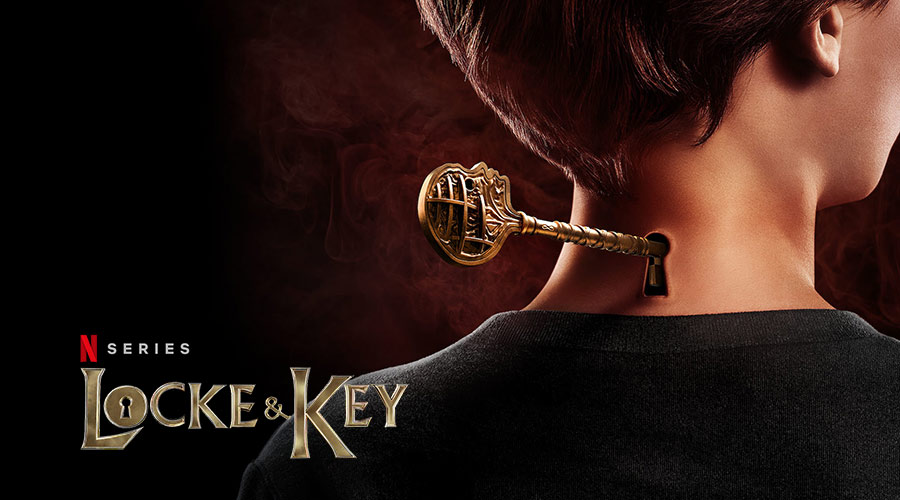
 

Locke & Key - Season 3

The 3rd (and final) season of Netflix’s Locke & Key (2020 – 2022) finds its protagonists with more trouble at the Keyhouse, but who’s holding the key to solve the mystery in the series finale? Fairy-tale like and owning a big portion of its inspirations to Stephen King, this is well-made but ultimately forgettable.


The narcotics trafficking action goes to Mexico in the 1st season of the aptly named Narcos: Mexico (2018 – 2021) – available on Netflix – and is about the rise of the Guadalajara cartel and the war that the newly-formed DEA had to perform in order to sedate the drug distribution and countless killings. Well-made and with thorough research of its subject matter as well as the historical backdrop, this is gangster television at its best.


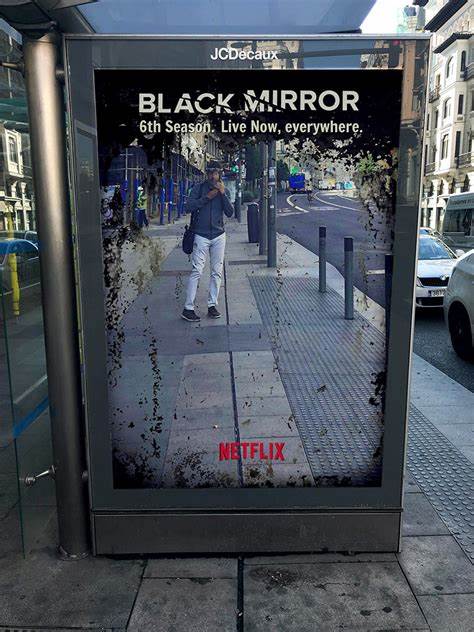
Black Mirror - Season 6

Upsetting and more relevant than ever, the 6th season of Netflix’s Black Mirror (2011 – present) is set to scare the shit out of technophobes the world over, with its brilliant five episodes that include ‘Joan is Awful’ in which a start up company’s well-paid employee (Annie Murphy) is seeing her life getting hijacked by a streaming platform that uses it as the template for a series starring Salma Hayek; ‘Loch Henry’ which is about a young couple (Samuel Blenkin and Myha’la Herrold) who study filmmaking and abandons its weak-sounding project about an egg man, in favor of a true crime story that seems to have more bread to it; the feature-length ‘Beyond the Sea’ that is a demented love story and the weakest entry in this season, but at least it is perfectly tuned with the entire ‘identity theft’ thematic concept; ‘Mazey Day’ in which the titular movie star is suffering from an undisclosed condition and seeks isolation, but the obstacle of the Hollywood paparazzi appears to be hard to overcome; the feature-length ‘Demon 79’ takes us to late 1970s England but only merely touches the cinematic aesthetics of the era and tells the story of a woman with brief violent visions who gets approached by genie that gives her motive to perform a series of murders.
 

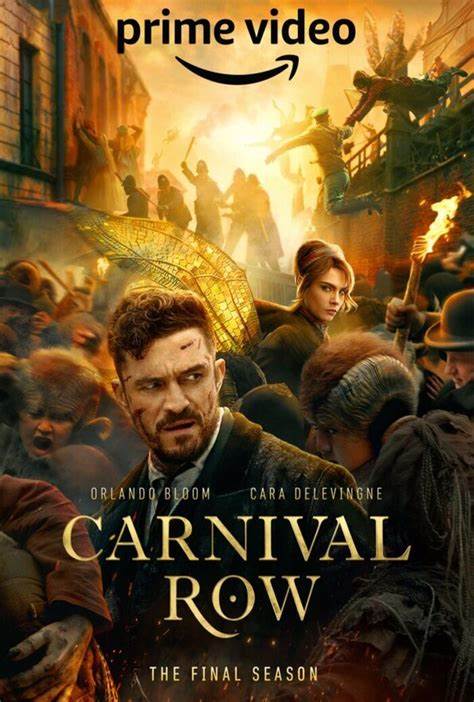
Carnival Row - Season 2

Set in Victorian-era England, the 2nd season of Amazon Studios’ Carnival Row (2019 – 2023) employs the fantasy world of fairies in order to raise questions about racism and constitutional power abuse. This final season is much more violent and gritty than the first (a welcome twist) and also benefits from great performances (Orlando Bloom and Cara Delevingne star) and stunning set & costume design. It is not without its faults though, as the main CGI monster is horribly laughable and the final episode’s queer twist came out of nowhere.
 

The 2nd season of Netflix’s Russian Doll (2019 – present) has the attractive chain-smoking stereotypical New Yorker Nadia Vulvokov (Natasha Lyonne) in another time-travelling adventure that takes her back to 1982, and the show with some of the most adorable dialogues in recent TV history, as well as a lovely rock and new wave soundtrack is an absolute winner.


The 2nd season of Marvel Studios’ I Am Groot (2022 – present) is offering five more short stories of the titular tree kid getting involved in hilarious and cute adventures, all featuring stunning animation work.


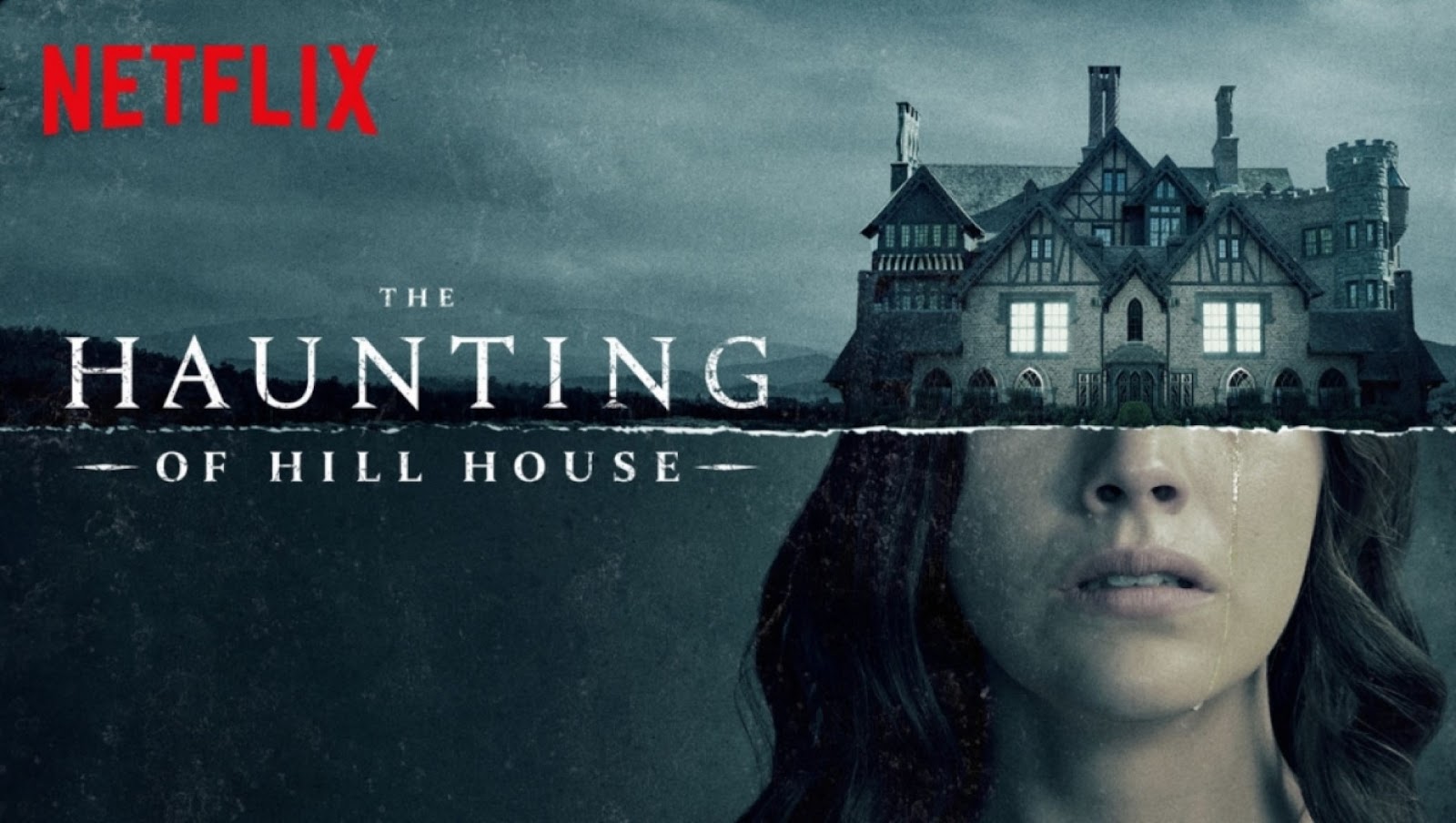
The Haunting of Hill House - Season 1

The sole season of Netflix’s The Haunting of Hill House (2018), created and directed by Mike Flanagan (who also wrote many of its episodes, based on Shirley Jackson’s classic horror novel) is about the titular residence that spooks a family’s past and present. Well-made, genuinely scary, and engaging throughout its mere 10 episodes, this is modern horror television at its best – a masterful event for the small screen that its eeriness will be cherished for years to come.
 

The Mandalorian

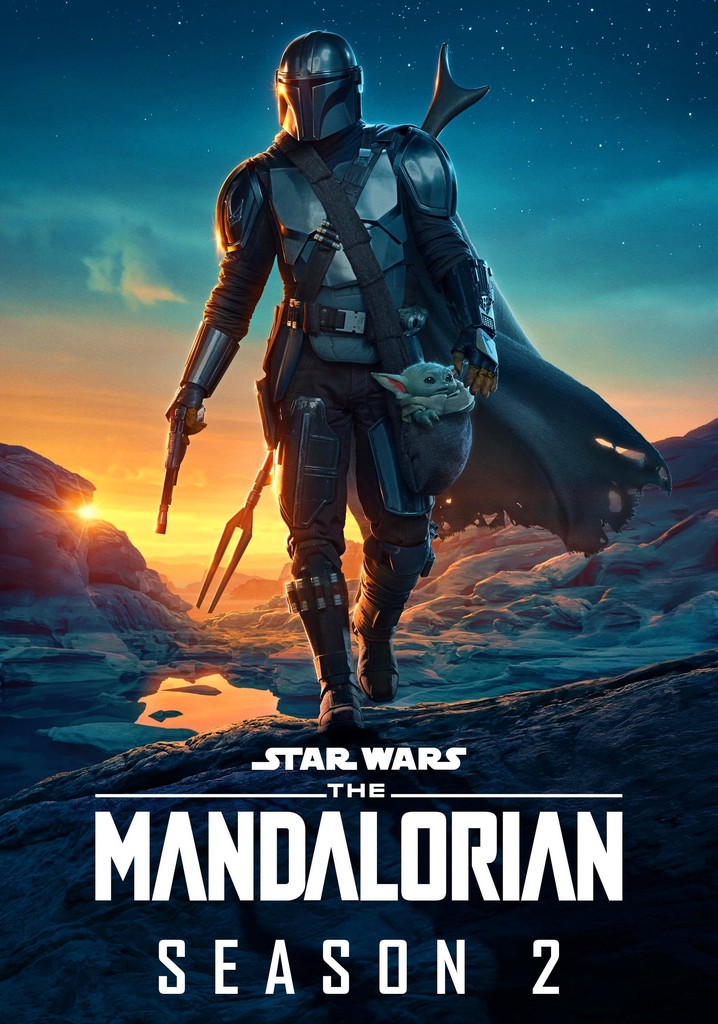
Set in the Star Wars universe, Disney’s 2nd season of The Mandalorian (2019 – present) is offering further adventures of the titular bounty hunter (Pedro Pascal) as he protects an overwhelmingly cute baby Yoda and gets mixed-up in all sorts of action-packed situations, but the real riches of the series lie in its gorgeous and spot-on spaghetti western aesthetics.
 

And now, please allow me a word on some recent mainstream film releases…


Writer/director James Gunn with his wild cinema influences that combine humor (often of the Meta kind) and PG-13 violence seems ideal at this stage of superhero movie overkill, and he expectedly delivers the goods in Marvel Studios’ Guardians of the Galaxy Vol.3 (2023), an epic 2 and a half hour spectacle that perfectly gels action with emotion, showcasing the importance of heroics in a universe that goes bananas, not very unlike the current state of affairs.


The Flash (2023)

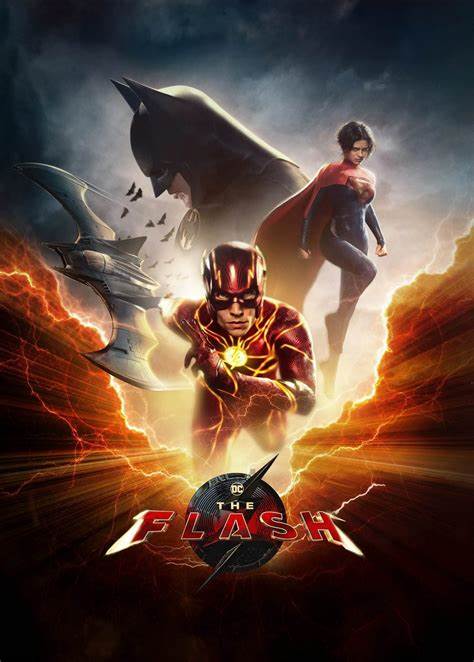
DC’s The Flash (2023), directed by Andy Muschietti, is about the titular superhero (Ezra Miller) who accidentally tampers with time and creates a mix-up with parallel universes, resulting in several versions of friends and enemies (including an aged Michael Keaton return as Batman) to come up forward with different agendas, while he also takes the opportunity to try and correct some wrongs from his past. This is not really a movie but more of a CGI showcase, as there is barely any shots, let alone scenes that are not enhanced by this technology, and had me wondering if the filmmakers shot anything else other than a few known actors against green screen backgrounds. This is a terrible example of cinema (if it even qualifies as that) that says a lot about the awful state of pop culture.
 

Indiana Jones and...

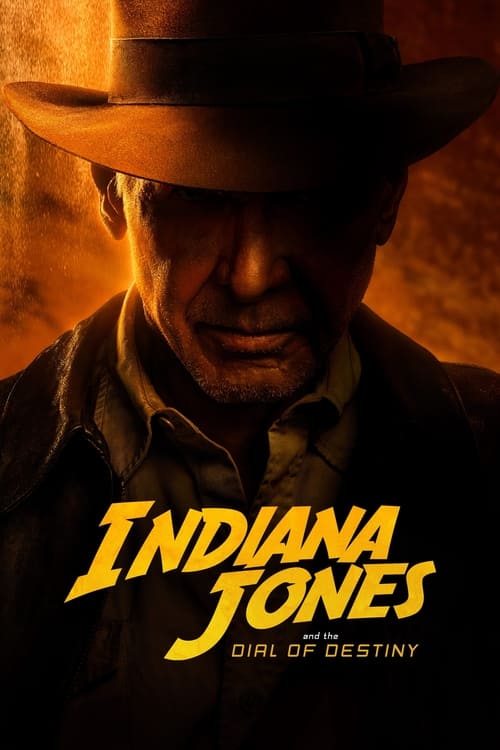
Indiana Jones (Harrison Ford) goes back and forth in time in director James Mangold’s Indiana Jones and the Dial of Destiny (2023) thanks to the powers of the Antikythera mechanism and the newfound de-aging CGI techniques, only to fight Nazis again, this time led by Jurgen Voller (Mads Mikkelsen). Expectedly bombastic with its outrageous $300 million budget, this feels like an endless chase sequence, and while it is entertaining enough (if a bit too long at two and a half hours long), it didn’t really gel with blockbuster audiences (most people who grew up with Indy’s adventures are now beyond their forties, me included).
 

Barely directed by Steven Caple Jr., Transformers: Rise of the Beasts (2023) seems mostly like the work of a committee – Michael Bay is a producer, and Steven Spielberg is an executive producer – and its barebones scenario takes us back to a long time ago, namely the 1990s when the Maximals join the Autobots on a fight with the usual high stakes: saving the world once again! Featuring human-like robots, animal-looking robots (all of them speaking with a variety of stereotypical accents), that are adequate at transforming into cars and vice versa, and only a handful of human actors, this lifeless CGI charade will have you wondering why $400 was spent for its making, and even more so why enough people went to see it in theaters to gross $439 million.


Mission: Impossible - Dead Reckoning Part One

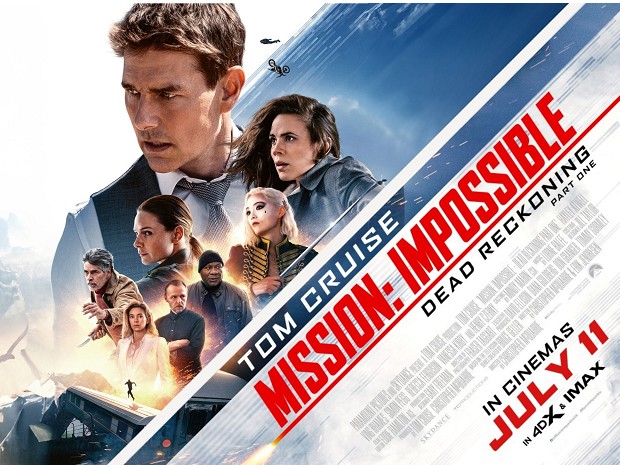
Produced by Tom Cruise (the film’s star) and Christopher McQuarrie (the film’s director) on a massive $291 million budget, the bombastic Mission: Impossible – Dead Reckoning Part One (2023) is about the hunt for a two-part key that can give the ultimate power to whoever gets to own it. All of the franchise’s standard tropes are here including facial recognition-avoiding masks and self-destructed messages, as well as James Bond-like travelogue footage of pretty much every tourist location in the world and beyond, but as per usual where the film really shines is during Cruise’s epic stunts (that he performs sans the aid of a stunt man) that reveal his obsession on becoming the western Jackie Chan. Sure, plenty of CGI is involved, but you’ll be in awe to witness how much of the action was actually shot in real sets. Suspenseful and entertaining throughout its 2 and a half hour running time, this is current action cinema at its best, and well-worthy of the $576.5 million it grossed.
 

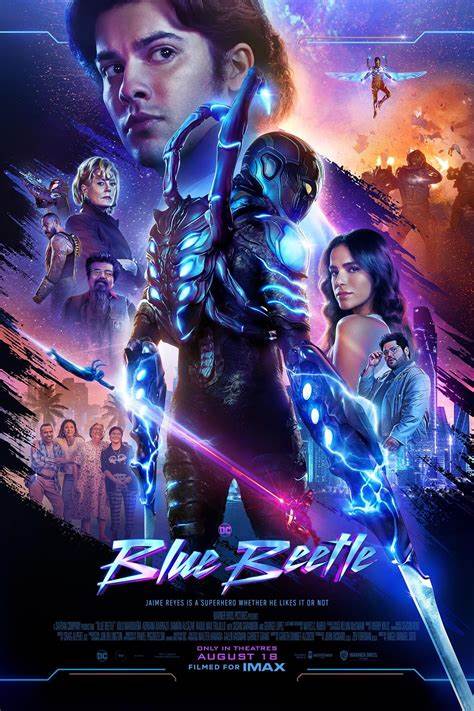
Blue Beetle (2023)

Barely resembling a real movie, let alone anything that you could call remotely ‘good’ or even ‘watchable’, DC’s Blue Beetle (2023) directed by Angel Manuel Soto is a piece of excrement that was seemingly made by an algorithm programmed by market metrics, rather than humans, as it is so predictable you could guess where every plot decision is going from miles away and the CGI are remarkably video game-like. Oh, yes, and the titular superhero is of Latin American background (Xolo Mariduena), because you know, you have to tick those ‘diversity’ boxes. The genre has run its course and considering this grossed a mere $129.3 million on an outrageous $104 million budget, the big studios should soon receive the message sane audiences has been sending them for a couple of years now.
 

And unlikely for me, this time I enriched my bookshelf with the following fiction book additions: Stephen King’s The Dark Tower: The Gunslinger (1978), Thomas Harris’ Hannibal box-set [Red Dragon (1981), The Silence of the Lambs (1988), Hannibal (1999), and Hannibal Rising (2006)], Patrick McGrath’s Spider (1990), William Landay’s Defending Jacob (2012), Don Winslow’s The Cartel (2015), and Burn (2014) by James Patterson & Michael Ledwidge.


Get books, comics, graphic novels and more at bunny17media.com. Use the code CHC at checkout for 15% off your purchase!

Follow Cinema Head Cheese:
Website: cinemaheadcheese.com
Facebook: /cinemaheadcheese
Twitter: @CinHeadCheese
Email: cinemaheadcheese@yahoo.com
Instagram: abnormalpodcast 
Pinterest: /abnormalpodcast/cinema-head-cheese/
RSS Feed: http://feeds.feedburner.com/CinemaHeadCheese
iTunes: https://itunes.apple.com/us/podcast/cinema-head-cheese-movie-reviews-news-a-podcast-and-more/id393261942?mt=2
Stitcher: http://www.stitcher.com/s?fid=18843&refid=stpr

You can support Cinema Head Cheese and Abnormal Entertainment on our Support Us page.

December 1, 2021

Static Age #19: Ultraman Ace (1972 – 1973) [Complete Series 05]

Ultraman Ace (1972 - 1973) BD box art


This Static Age’s spotlight goes to Ultraman Ace (1972 – 1973), ‘Ambassador from the galactic federation’ as per the front cover tagline of Mill Creek Entertainment’s excellent Region A Blu-ray box-set [Complete Series 05], which contains of all 52 episodes in their original Japanese (DTS-HD Master Audio 2.0) with optional English subtitles and a stunning 1080p High-Definition 1.33:1 transfer. The set also comes with a booklet that is featuring an introductory article to the series, and several guides (hero, episode, kaiju, character, and key technology).


Riding high on what is now defined as the second wave of kaiju entertainment from Japan, this new Ultra incarnation is significant because for the first time the series employ a story arc narrative that is prevalent throughout its entire run, instead of the usual one-offs or two-part episode format of the previous years. Said story arc finds the mean Yapool and his “Terrible-Monsters” experiments (kaiju much more powerful than what we were used to) attempt to push forward their plan for world domination, and it is up to Ultraman Ace to stop them!


‘Shine! The Five Ultra Brothers’ introduces us to Ultraman Ace, the fifth Ultra brother of alien saviors, who has passed his transformation ring to Seiji Hukuto (Keiji Takamine) and Yuko Minami (Mitsuko Hoshi), and the union of the couple upon cases of emergency will transform them to the superhero – and what do you know, the first emergency comes in the form of the fire-breathing monster Verokron that wreaks havoc upon the city of Fukuyama. A mysterious, oversized, silver egg that devours people makes an appearance in ‘Surpass the Giant Terrible-Monster’, before the ancient Chameleking monster shows up to battle with Ultraman Ace. In ‘Go Up in Flames! Terrible-Monster Hell’ the skies break and unleash the Vakishim monster. ‘A 300-Million-Year-Old Terrible-Monster Appears!’ is a very grim episode in which manga artist Mushitaro Kuri drugs Mikawa and keeps her prisoner in an attic with a dead body (such scenarios wouldn’t fly in today’s television), not to mention that he also unleashes the Garan monster. In ‘The Giant-Ant Terrible-Monster Vs. The Ultra Brothers’, young women disappear in moving sand as the ground opens in the middle of the city, and the only common denominator is that they all have type O Blood. An possessed-by-an-alien astronaut won’t remove his gloves because his hands have eyes in ‘Solve the Mystery of the Transforming Terrible-Monster!’. ‘Monster Vs. Terrible-Monster Vs. Alien’ is featuring an impressive monster showdown and the story continues in blood-soaked fashion in ‘Life of the Sun is the Life of Ace’. A pictures transforms a newspaper editor into the Gamas monster in ‘100,000 Terrible-Monsters! Surprise Attack Plan’. An evil version of Go is back in ‘Duel! Ultraman Ace Vs. Hideki Go’, but is it really him? In the otherworldly and a bit sexist ‘Terrible-Monster is Ten Women?’ the Unitang is really the women! The structurally unorthodox ‘The Red Flower of a Vicious Cactus’ has Ultraman Ace fighting the Sabotendar monster early on, before it transforms into a regular-sized cactus, albeit a carnivorous one. The series go Christian-themed in ‘Execution! Five Ultra Brothers’, in which the Ultra brothers get crucified, thanks to the Anti-Universe also known as Golgotha – the story continues in ‘5 Stars Scattered in the Galaxy’, in which Ace-Killer also appears. ‘Summer Horror Series: Curse of the Black Crab’ is featuring Ultraman Ace sumo-wrestling a crab monster. ‘Summer Horror Series: Scary Story of the Cattle God-Man’ is about a man that transforms into the Cowra monster, a creature resembling a cow. The titular presence of ‘Summer Horror Stories: The Demon Woman of Hotarugawara’ causes car accidents. ‘Give the Pigeon Back!’ is featuring the Black Pigeon monster. ‘The Mystery of the Haunted Kappa Mansion’ is one of the best episodes in the series and it includes a terrible monster that comes out of a swimming pool and steals people’s bellybuttons (you can’t make this up!), while some of them also happen to be eerie robots on the inside! ‘Stars of Youth is the Stars of Two’ is featuring a flying ship, as well as the mandatory terrible monster, not to mention TAC team members’ disbelief of the former sighting, as if the twice-a-week destruction of Tokyo by numerous kaiju is not as strange. ‘I Saw a Vision of the Celestial Maiden’ is an episode about the aforementioned beauty becoming a monster. Featuring fascinating kills and an amazing terrible monster, ‘Vengeance Demon Yapool’ is truly one of the greatest episodes in the series. ‘A Game Changer! Here Comes Zoffy’ is about old men luring children into ceremonial chants before they disappear (in today’s world this scenario wouldn’t fly, let alone in a children’s show); it’s your only chance of seeing a finale that has children falling from the sky, as if there was not enough bad shit in the air anyway. ‘Behold! Midnight Transformation’ is featuring raining blood, but instead of the metal band Slayer, you get another awesome kaiju! ‘Pyramid is a Terrible-Monster Nest!’ is about Michiru and her dangerous red smoke games, until the story escalates to a Pyramid that is housing a Pharaoh-like monster. The five Ultra brothers finally meet their match in the form of the Hipporit monster in ‘Annihilation! The 5 Ultra Brothers’; the story continues in ‘Miracle! Father of Ultra’, in which the Ultra father saves the day. The landmark ‘Goodbye Yuko, Sister of the Moon’ episode is horror-themed, featuring a werewolf-like terrible-monster, as well as the departure of Yuko, leaving Seiji the sole Ultraman Ace ringmaster. The dangers of alcoholism, as well as a monster that comes out of a graveyard are covered in ‘The 6th Ultra Brother’. ‘You Can See the Star of Ultra’ is featuring the Red Jack terrible-monster.


And now, let’s switch our focus towards some recent series…


Handmaid's Tale - Season 4

The 4th season of The Handmaid’s Tale (2017 – present) finds resistance leader June Osborne (Elisabeth Moss) on the run after managing to organize the capture of several leaders of the tyrannical Gilead misogynist and fascist dictatorship. Boasting great drama as well as starting relevant discussions on freedom versus authoritarianism, this is absolutely one of the most intelligent, important, and relevant television series ever. What’s more this is the series’ best and most engaging season since its first.


Locke & Key - Season 2

The 2nd season of Netflix’s Locke & Key (2020 – present) and its seemingly complicated and difficult to achieve shoot had me thinking that cinema (and nowadays also series) is all about showing you things you hadn’t previously seen whilst maintain a conventional narrative, and this show completely succeeds at this. What is it about? Well, the teenage filmmaking team finds some success but also amidst a chaos involving memory loss, demonic powers, and the keys of course. Although, at the end of the day this is a show about people who lost their keys.


Doctor Who - Season 11

The 11th season of Doctor Who (2005 – present) is original for both maintaining a story arc for most of its run and introducing the first female Doctor (the quirky and gorgeous Jodie Whittaker). It kicks off with ‘The Woman Who Fell to Earth’ and introduction to the female protagonists and her group of sidekicks as well as an alien menace in the form of an impressive ‘man in a suit’ robot. In ‘The Ghost Monument’ the Doctor attempts to solve the mystery of the Desolation. In the excellent and touching ‘Rosa’ the Doctor and her sidekicks find themselves in 1955 Alabama where they meet Rosa Parks and Martin Luther King. Part U.S. election satire and part spider horror, ‘Arachnids in the U.K.’ is a fascinating episode. ‘The Tsuranga Conundrum’ is a decent monster-of-the-week episode. ‘Demons of the Punjab’ is a soapy episode about the marriage of an Indian girl to a man from Pakistan. Although ‘Kerblam!’ kicks-off with an eerie concept, it ends up blatantly preaching anti-capitalist messages – I mean, we already know the system sucks, and it looks a bit naïve having a BBC series to explain this. One of the season’s better episodes is ‘The Witchfinders’ in which the protagonist team finds itself in 17th Century Lancashire amidst witch trials. Set in Norway, ‘It Takes you Away’ is about a mirror that is also a portal to another dimension. The season concludes with ‘The Battle of Ranskoor Av Kolos’ and ‘Resolution’.


Also, please allow me to speak a word or two about some recent mainstream films…


The Addams Familly 2 (2021)

The animated The Addams Family 2 (2021), directed by Greg Tiernan and Cornard Vernon, finds the mysterious and kooky cast of gothic characters facing a new challenge, namely a lawyer’s demand for Wednesday to have a DNA test in order to prove that he is not an Addams, but rather the daughter of a mad scientist. Less dark than the first installment, but still a beautiful manifesto on being difference and how weirdness is good, it surprises me in a good way that these old comic strip characters still have an audience today, in a world that being alternative to the instagram-dictated norm is less and less relevant and tolerated.


Director David Gordon Green’s Halloween Kills (2021) finds Michael Myers (a surprising but absolutely welcome and honorable return from Nick Castle – one of many tributes to the franchise’s original run) continuing his onslaught of murder and mayhem in Haddonfield, Illinois, preying upon his family members (Jamie Lee Curtis returning) just where he left them off in this trilogy’s first chapter (this being the second). Filled with numerous Easter eggs for fans of the series as well as unbelievable gruesomeness (it’s as if Blumhouse wanted to make the bloodiest entry – it succeeded), and a top-notch score by John Carpenter himself, this is a slasher masterpiece that should not be missed. Now, I can’t wait for the next one!


Stargate (1994) poster art

In Stargate (1994) the action kicks off in 1928 Egypt when a mysterious device is found during an expedition. Fast forward to the present day (i.e. 1994, when this was made) and nerdy linguist Dr. Daniel Jackson (James Spader) is approached by the military to decipher an ancient hieroglyph. He does so, only to find out that the code unlocks the device’s ability to transfer you in other planets. The scientist takes Colonel Jonathan O’ Neil (Kurt Russell) and his troops to another planet indeed where they find a civilization that worships Ra. Made on a $55 million budget and looking even more expensive and massive thanks to the ambitious staging by director Roland Emmerich [Independence Day (1996)] this takes the conspiracy theory-like plot [ever so prevalent in The X-Files (1993 – 2018) that was already a hit] and takes to another level of entertainment with its Indiana Jones-influenced approach. Grossing a massive $196.6 and defining a generation of sci-fi audiences, it spawned a massive franchise (mainly in television), in which we will dive further into in future installments of this column.


And finally, I would like to let you know that I enriched my bookshelf with the following additions…


After criminally neglecting adding Stephen Thrower’s landmark Beyond Terror: The Films of Lucio Fulci (FAB Press) to my collection when it first came out in 1999, I gladly did so with its new and updated 2018 massive hardback edition, which is chockfull of lavish design and high quality picture reproduction from a seemingly endless collection, but its real strength is the unparalleled text by its renowned author, generously unveiling years of hard work, research, passion, and knowledge. An essential work not only for the fans of Lucio Fulci, but also any fan of genre cinema in general.


Stephen Thrower’s excellent mammoth work Flowers of Perversion: The Delirious Cinema of Jesus Franco Volume Two (2018, Strange Attractor Press) is as you might have guessed (in case you live under a rock and haven’t yet heard of this delicious book) covering the second half of anarchist Spaniard director’s lengthy career. By combining academic (but genuinely interesting) analysis with deeply-dug historical fact, all filtered via the witty writing of its ace author, each review is pretty much the final word of the film tackled (the final analysis, as well as the ultimate thesis). Although Jess Franco’s work is so multi-dimensional that I doubt that we will be short of further analyses in the future (a book on the auteur by Tim Lucas is long due), it will be hard for Thrower’s input to be matched. Come to think of it, and in regards to the apparent continuum of Franco’s work – something that is well aided in the book as the films are presented in the order they were shot – I couldn’t help but feeling that it is a pity that his career of excesses and liberation had to end at some point (the moment of the director’s death), because the ideas in his films are like the ‘time’, they just go on infinitively. There are only a few pieces in the puzzle of his filmography that I have not yet seen.  Also included in the limited edition of the package – aside from postcards etc. – is another 100+ pages hardcover book with scanned reproductions of abandoned Jess Franco screenplays and their translations, appropriately entitled The Sinister Case of Dr. Franco.


Get books, comics, graphic novels and more at bunny17media.com. Use the code CHC at checkout for 15% off your purchase!

Follow Cinema Head Cheese:
Website: cinemaheadcheese.com
Facebook: /cinemaheadcheese
Twitter: @CinHeadCheese
Email: cinemaheadcheese@yahoo.com
Instagram: abnormalpodcast 
Pinterest: /abnormalpodcast/cinema-head-cheese/
RSS Feed: http://feeds.feedburner.com/CinemaHeadCheese
iTunes: https://itunes.apple.com/us/podcast/cinema-head-cheese-movie-reviews-news-a-podcast-and-more/id393261942?mt=2
Stitcher: http://www.stitcher.com/s?fid=18843&refid=stpr

You can support Cinema Head Cheese and Abnormal Entertainment on our Support Us page.

June 2, 2020

Static Age #10: Ultraman (1966 – 1967) [Complete Series 02]

Ultraman (1966 - 1967) [Complete Series 02] BD box art.
This Static Age is focusing on Ultraman (1966 – 1967), ‘Protector of the universe’ as per the front cover tagline of Mill Creek Entertainment’s excellent Region A Blu-ray box-set [Complete Series 02], which contains of all 39 episodes in their original Japanese (DTS-HD Master Audio 2.0) with optional English subtitles and a stunning 1080p High-Definition 1.33:1 transfer. The set also comes with a gorgeous booklet that is featuring the ‘The Birth of Ultraman’ and ‘Series History’ articles, both excellent introductory pieces to the series, and several guides (episode, monster, character, and key technology).

The show is about the titular giant alien that arrives on Earth from the Land of Light in Nebula M78 when he was hunting a monster. However, when Ultraman comes in contact with Science Special Search Party he comes to the understanding that he must stay on our planet in order to assist us with the threats of more giant monsters and the like. This is Tsuburaya Production’s first series in color and its remarkable success both in its homeland Japan and abroad in the U.S. spawned a franchise unlike no other, one that is churning up good product to this day.

It’s funny how the voice-over takes Ultraman’s side, sounding a bit like a speaker of a sports match that supports one of the competing teams. The episodes were shot in three blocks (each shooting block responsible for turning up with 13 episodes), and Ultraman had a slightly different costume for each block. ‘Ultra Operation No. 1’ is the origin story in which Ultraman arrives at Lake Ryugamori where he will also fight his first enemy, the monstrous Bemular. In ‘Shoot the Invader’, the Baltan monsters spread terror by freezing humans but as it is to be expected Ultraman is on the rescue. In ‘Science Patrol, Move Out’ the monster Neronga that was buried by a samurai in a well is apparently still alive and also has the power to make itself invisible! In ‘Five Seconds Before the Explosion’ an atomic bomb brings to life a mutated monster called Ragon, and now Ultraman must destroy it and also prevent the detonation of further atomic bombs. ‘The Secret of the Miroganda’ is about the titular flower that is protected by the Greenmons monster which looks like a combination of a plant and a green blob. Guesra, the amphibious Brazilian monster attacks the coast of Tokyo in ‘The Coast Guard Command’. ‘The Blue Stone of Baradhi’ is featuring an overtly ambitious plot that takes its action from Turkey to France, only to settle in the titular ancient city where an Ultraman statue has kept the Antlar monster buried in the sand; that is until now, when the aforementioned monster that resembles a beetle with a mouth that looks like a vagina and is guarded by two claws, essentially creating an overall uncomfortable ‘vagina dentata’ situation. As its title suggests, ‘The Monster Anarchy Zone’ is about a mash-up of many monsters, the most terrifying of them being Red King. It is in this episode that the series, despite how children-friendly they are, started employing the occasional gore scene and the monsters bleed. ‘Lightning Operation’ is an unremarkable episode starring a Gabora monster. ‘The Mysterious Dinosaur Base’ is about a mad scientist (is there any other kind?) that fascinated with his experiments goes as far as to create dinosaurs; it is now up to Ultraman to put things back to order but he will also find time to detach part of a monster and to utilize it as a provocation in the style of Spanish bullfighters. In the comedic but thoroughly entertaining ‘The Rascal from Outer Space’ a shooting star stone that took liquid form managed to create the Gango monster. The first half of ‘Cry of the Mummy’ is fascinating because it is actually about a mummy-like monster, but the second half is introducing us to the ridiculous Dodongo creature that Ultraman gets to ride rodeo-style and the entire thing falls apart. ‘Oil S.O.S.’ is about the titular monster Pestar that consumes great amounts of – you guessed it – oil, and sets miniature facilities on fire; that is until Ultra man employs his (literally) handy Ultra Water Stream power and extinguishes the fires. ‘The Pearl Defense Directive’ is about the Gamakugira monster that has an appetite for expensive pearls. In ‘Terrifying Cosmic Rays’ the pathetic Gavadon monster comes to life thanks to a kid’s drawing. In the amazing ‘Science Patrol Into Space’ episode, a whole lot of Baltans (the awesome bipedal monsters with claws) attack and it is now up to Ultraman to save us, but he will need to employ his teleportation power, something that drains a lot of his life level as shown in the light on his chest. ‘Passport to Infinity’ is featuring the laughable Bullton monster. In ‘Brother from Another Planet’, the Zarab monsters transforms into an evil Ultraman (essentially the same suit, but with modified and differently colored eyes) who will of course fight the good Ultraman; the episode is particularly well-lit, especially during the foggy scenes in the shadows that play like a thriller. In ‘Demons Rise Again’ the Banila and Aboras monsters fight each other in a spectacular battle. ‘Terror on Route 87’ is suffering by the employment of some very awkward-looking stock footage with which the main actors interact sans proper eye-line matching. ‘Breach the Wall of Smoke’ is featuring some of the most spectacular scenes of (miniature) destruction in the series, courtesy of the turtle-like creature Kemular, or as is also known the Poison Gas Monster. ‘Overthrow the Surface’ is atmospheric and creepy, featuring the eerie Underground people that have no eyes and that unleash the Telesdon monster. ‘My Home is Earth’ is featuring the spectacular Jamila monster that throws flames from its mouth! The fascinating ‘The Undersea Science Center’ is featuring a shark-like monster (before they were cool) with a driller-like nose that can dig a hole in the ground and cause destruction as well; it is of course up to Ultraman to save the day again, but the episode is mostly memorable due to its brief but breathtaking underwater sequences. Three monsters, Guigass, Dorako, and Red King II show up in ‘The Mysterious Comet Tsuifon’ and it is up to Ultraman to bring things back to order. ‘The Monster Highness: (Part 1)’ and ‘The Monster Highness: (Part 2)’ feature the Gomora creature, not to be confused with the same-titled Italian gangster series.

And now, let’s switch our focus towards some recent shows…

Freud - Season 1 poster art.
Set in 1880 in Vienna, the 1st season of Netflix’s Freud (2020 – ongoing), a German/Austrian co-production, is about the titular psychoanalyst (played par excellence by Robert Finster) and his input in the investigation of a series of gruesome murders, among the ridicule of his profession by fellow doctors. In the meanwhile, a mysterious and beautiful woman Fleur Salome (the immensely gorgeous Ella Rumpf) as well as her personal demon Taltos (from the Hungarian mythology) will become Freud’s first real patient and by working in this case he will be shaped into the professional and human being that he was. These series don’t really know what they want to be, as sometimes they bear the sensibilities of a gothic melodrama and others opt for gross-out gore, and what’s more sometimes they go for a supernatural and dreamy approach, while others they opt for violent realism, but whatever they do, they do it great.

Based upon a graphic novel, Netflix’s Locke & Key (2020 – ongoing) is about the Locke siblings that after the mysterious murder of their father, they move with their mother to a secluded house, in which they discover a number of magical keys that help them enhance the dimensions of their lost one’s world. This modern gothic melodrama is never tiresome at only 10 episodes long, and it is also good proof that comic books are nowadays much more intelligent than the basic super-heroic and comedic stuff that my generation was reading back when we were kids. The series’ cutest aspect is the Savini Squad which is basically a group of nerdy filmmakers that try to make a splatter/monster movie and while doing so they also offer tons of geeky horror movie references; what’s more, Tom Savini himself also provides a cameo. The season finale is genuinely creepy.

Unorthodox (2020) art featuring Shira Haas as Esty.
Based upon a real story, Netflix’s limited series Unorthodox (2020), consists of four episodes (about an hour long each), and it is about the story of young bride Esty (Shira Haas, delivering what has to be the most powerful performance in a television series of the last decade – I simply can’t imagine how she copped with its demands) who flees from an arranged marriage (I consider those to be forced marriages in one way or another) and her strict and orthodox Jewish community in New York, in order to find a new life in Berlin (the city and its culture are portrayed very realistically here) as a pianist where her lesbian mother also lives. Stressful and stomach-churning, this is important story-telling and these excellent series should be seen by all, if only in order for such dreadful cultures to be exposed. If you thought only Christians and Muslims are bananas, wait until you see this.

The Mandalorian - Season 1
The 1st season of Disney Plus’ The Mandalorian (2019 – ongoing), created by Jon Favreau and consisting of 8 episodes, is about the titular helmet-wearing and cape-boasting pistolero (Pedro Pascal) who comes to the rescue of baby Yoda, and as a result the internet breaks down, overwhelmed in cuteness. Owing more to spaghetti westerns of the 1960s and 1970s, rather than anything George Lucas ever directed, this is featuring a version of the New Republic that resembles the old west, rather than the space opera aesthetics that the franchise had us used to. It is only occasionally exciting and visually pleasing, but most of the times it is tedious and boring.


The 6th season of Marvel’s Agents of S.H.I.E.L.D. (2013 – ongoing) finds the titular heroes where the last season left them, namely all around the galaxy looking for Phil Coulson (Clark Cregg) who this time returns as the mysterious Sarge and along with his team of aliens they have evil plans. The real villain of the season though is Izel (Karolina Wydra), who has already destroyed many planets and won’t hesitate to perform the dirty deeds again. The concept is tired at this stage, but the special effects keep getting better and better, and they do include anything imaginable, from spaceships to mummy-like baddies and from bat-like creatures to zombie-like abominations. The plot is all over the place, but strangely it works.

Get books, comics, graphic novels and more at bunny17media.com. Use the code CHC at checkout for 15% off your purchase!

Follow Cinema Head Cheese:
Website: cinemaheadcheese.com
Facebook: /cinemaheadcheese
Twitter: @CinHeadCheese
Email: cinemaheadcheese@yahoo.com
Instagram: abnormalpodcast 
Pinterest: /abnormalpodcast/cinema-head-cheese/
RSS Feed: http://feeds.feedburner.com/CinemaHeadCheese
iTunes: https://itunes.apple.com/us/podcast/cinema-head-cheese-movie-reviews-news-a-podcast-and-more/id393261942?mt=2
Stitcher: http://www.stitcher.com/s?fid=18843&refid=stpr

You can support Cinema Head Cheese and Abnormal Entertainment on our Support Us page.